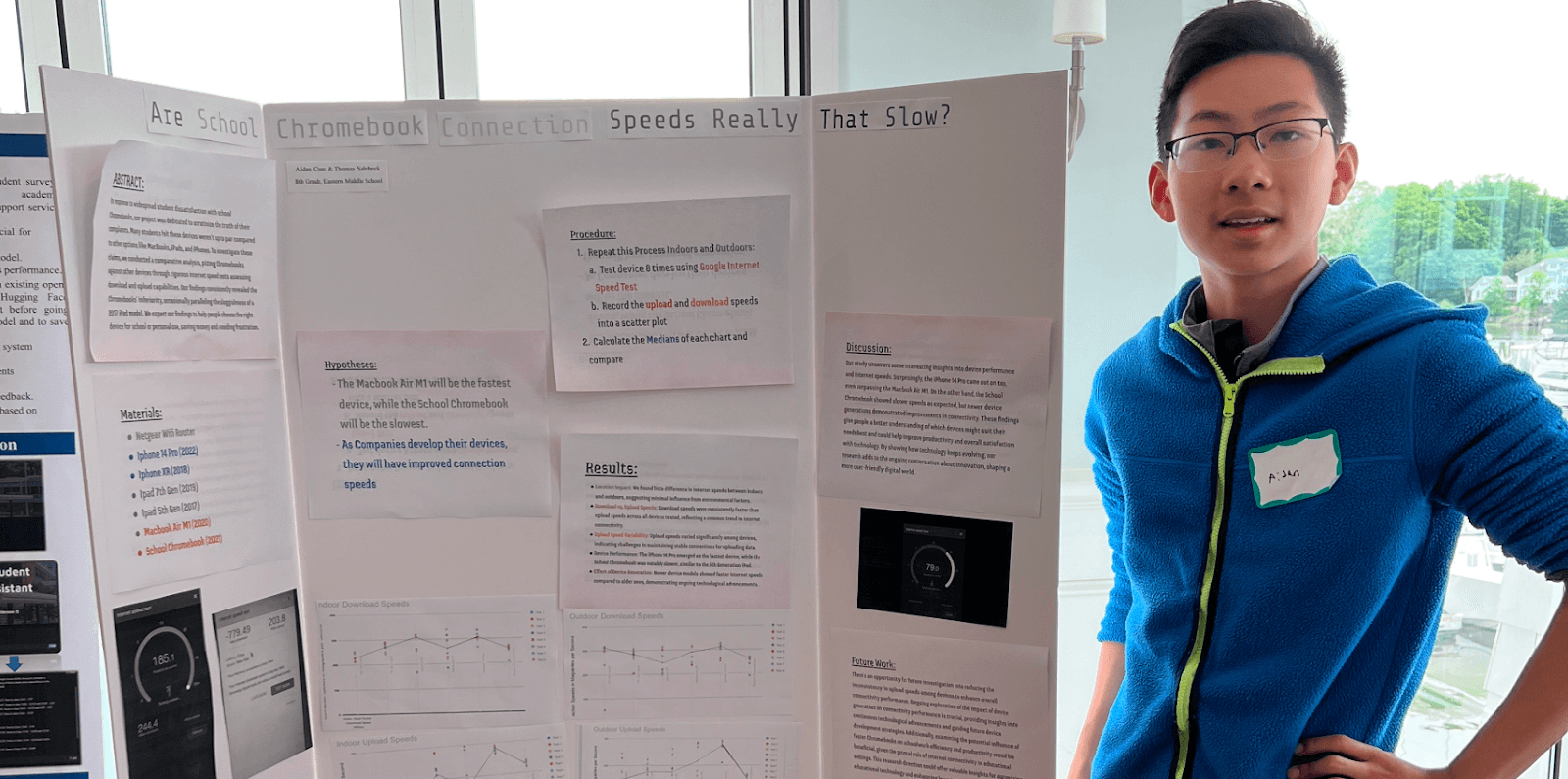
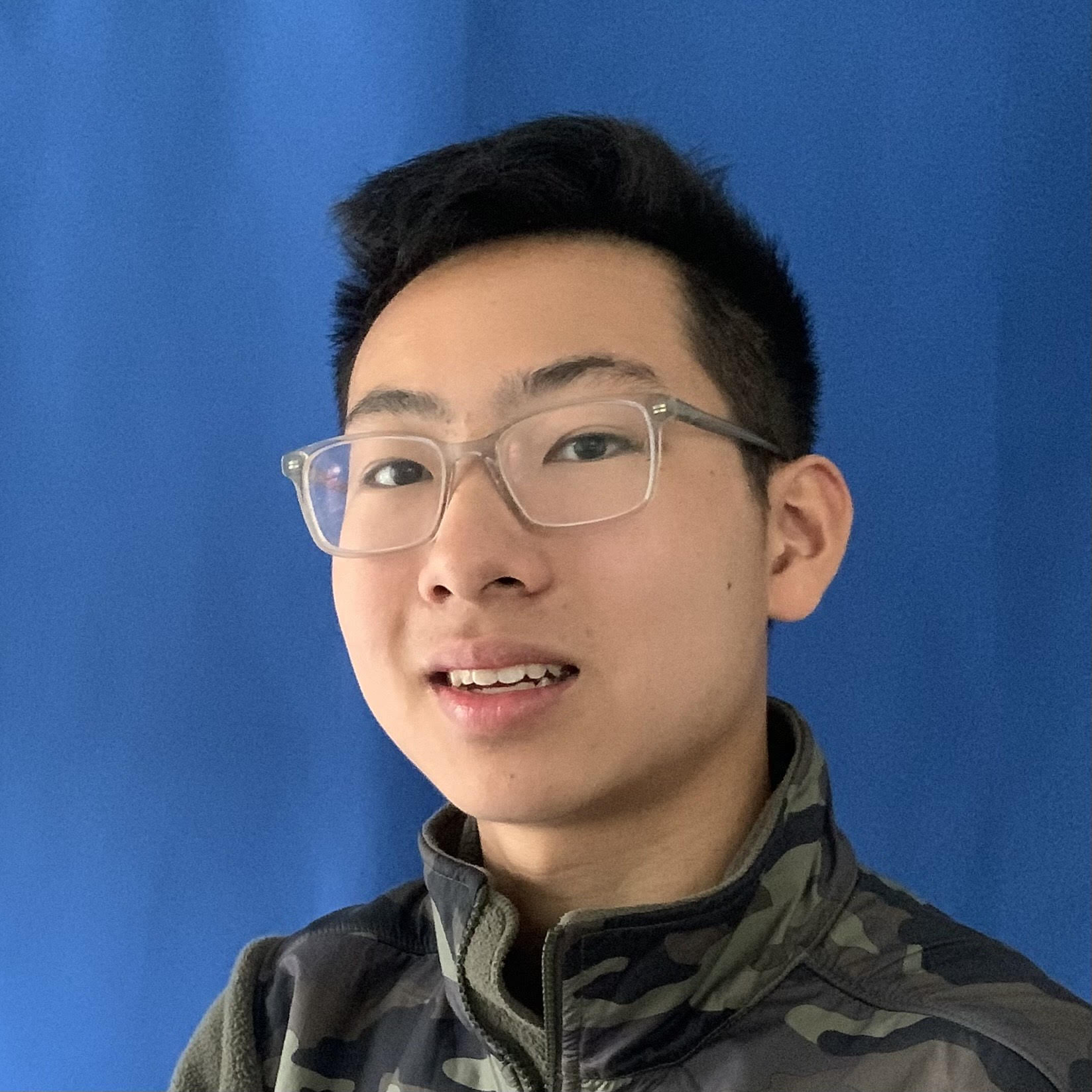
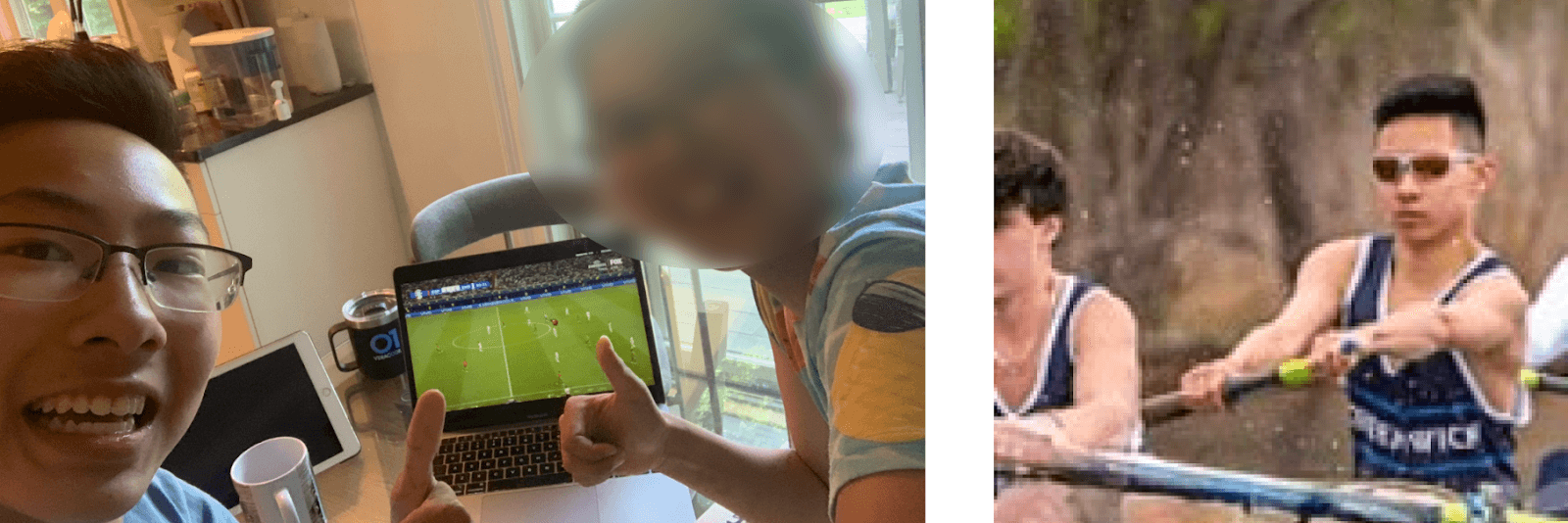
Aidan Chan is a high school student from Connecticut passionate about astronomy. His fascination with space began in fifth grade, and he has since combined his love for biology and astronomy to explore astrobiology. Aidan is an active member of his school's science club, where he competes in Science Bowls, and he has also made a name for himself in the chess community, contributing to his team's recent state championship win. Outside of academics, Aidan enjoys rowing and is an avid football fan.
During the Summit STEM Fellowship, Aidan was inspired by the diverse community of fellow students and mentors, which motivated him to launch his own podcast focused on astrobiology. He aims to enhance his scientific skills through internships and is particularly interested in working at an observatory. Read on to learn more about Aidan, his podcast journey, and his exciting future aspirations in the world of science!
Meet Aidan!
How did you initially become interested in STEM?
From a very young age, I was really interested in knowing more. I played a lot with Legos, which was instrumental in how I first encountered engineering and STEM. My parents also come from STEM fields; both work in finance, and my dad actually majored in chemistry when he first came to the States. So, there’s some family interest there that I think caught on with me.
What academic subjects or fields of STEM are you most interested in?
I’m most interested in astronomy, specifically astrobiology, which is the study of life in space. I find it fascinating because it combines biology and astronomy, both of which I love. I think my interest in astronomy started in fifth grade. Later, after taking biology in my freshman year of high school, I realized I had many questions about various fields of science. I became interested in how anatomy relates to evolution and had questions about biochemistry. I felt that my initial love for astronomy, combined with my curiosity in biology, would work well together, making astrobiology a perfect fit for me.
What extracurricular activities are you involved in, and what do you enjoy doing in your free time?
I participate in rowing as my main sport, which takes up a lot of my after-school hours, but I love it. It’s a great way to bond with friends and build dedication and strength. I’m also part of my school’s science club and the chess club, where we recently won a state championship. In the Science Club, we participate in Science Bowls. I find it fun to know random pieces of trivia, and it’s really rewarding when you get them right.
Fellowship Experience
What were your favorite parts about the Summit STEM Fellowship?
My favorite part was definitely getting to know other people. I loved talking to others, playing games, socializing, and just having goofy fun!
Out of all the different events, one of my favorites was probably the coffee chats. My first coffee chat was pretty chaotic since it was the first one. Once we realized we could start painting and inserting images into the room, it got a bit wild, and it was really funny. I also enjoyed Isabella's Fireside Chat about creating a personal project, a passion project, because that helped me create my own podcast about astrobiology, which is my favorite subject.
That’s awesome! Could you tell us more about the podcast you were inspired to launch?
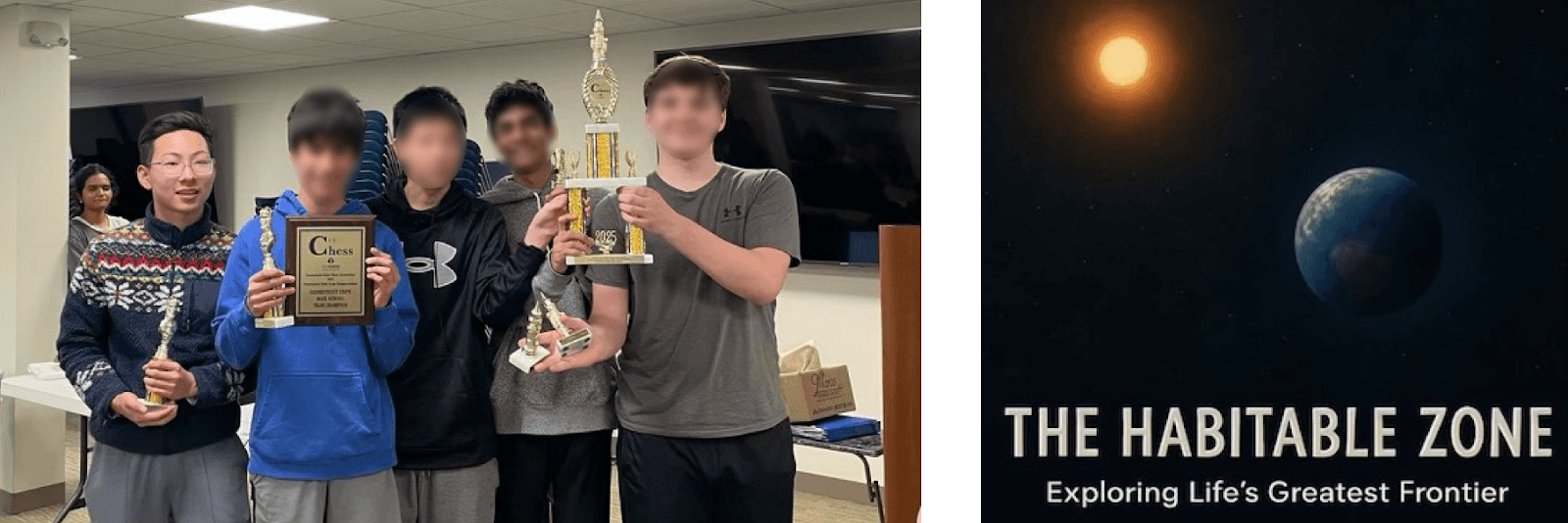
Yes, of course! My podcast is called the Habitable Zone, and we explore a wide range of different topics like stars in other galaxies, biochemistry, and moons. We’re on Spotify, and we're also on Apple Podcasts and a few other platforms. I’m currently working on our social media and hoping to raise more awareness about the podcast!
What would you say is the most useful skill you’ve learned from the fellowship?
I've learned how to study better. Active recall is something I've been trying to use more when I study. With the limited time I have and the increasing number of tests, I need to be efficient, and active recall has been a great way for me to improve my study efficiency.
What advice would you give to future Summit STEM fellows?
The biggest piece of advice I would give is to be present! Don’t just sit there; actually engage. If you have time, try to make it to all the optional events. They’re fun and really interesting, and I personally enjoyed them. So, participate, talk to people, and take something meaningful from the fellowship because that’s what you’re there to do.
Future Aspirations
Where do you see yourself in the next five to ten years? Do you have a particular career you’re hoping to pursue?
In the next two years, I hope to continue working on my science classes and studies and improve my rowing skills. I want to enhance everything I have right now and try to do some internships, maybe lab internships. I’ve always needed to work on my hands-on abilities, so that would be a great way to gain experience and contribute to the field. I’m not too certain about which colleges I want to attend, but I have some ideas. Places like Princeton have great astronomy programs. I’m aiming for at least a master’s in astronomy or microbiology, which are essential for astrobiology, and then hopefully move on to a space agency or something related.
How has the fellowship influenced your career aspirations?
The fellowship has definitely motivated me to start interning earlier. I'm focusing on getting an internship at an observatory. That would be very interesting for me since it’s hands-on, and it also deals a lot with astronomy. I'm also open to almost any other lab internship or just an internship in general related to the sciences. The program has also inspired me to seek a more public-facing role. There are so many interesting people in the Summit STEM Fellowship, and they've inspired me to want to do something different. I want to carve out my own special niche.
What have you been up to since the fellowship?
After the fellowship, I attended the Sagan Summer Workshop virtually. It was a great experience to see everything going on, even though I didn’t understand everything. I’ve also been studying a lot over the summer for honors chemistry, so I can take the AP course this year. I’m also excited to continue working on and growing the Habitable Zone, the podcast I started during the fellowship!