Summer 2026 applications are now open. Fill out a 2026 Summit Application here!

Summer 2026 applications are now open. Fill out a 2026 Summit Application here!

Summer 2026 applications are now open. Fill out a 2026 Summit Application here!

Summer 2026 applications now open. Apply here!

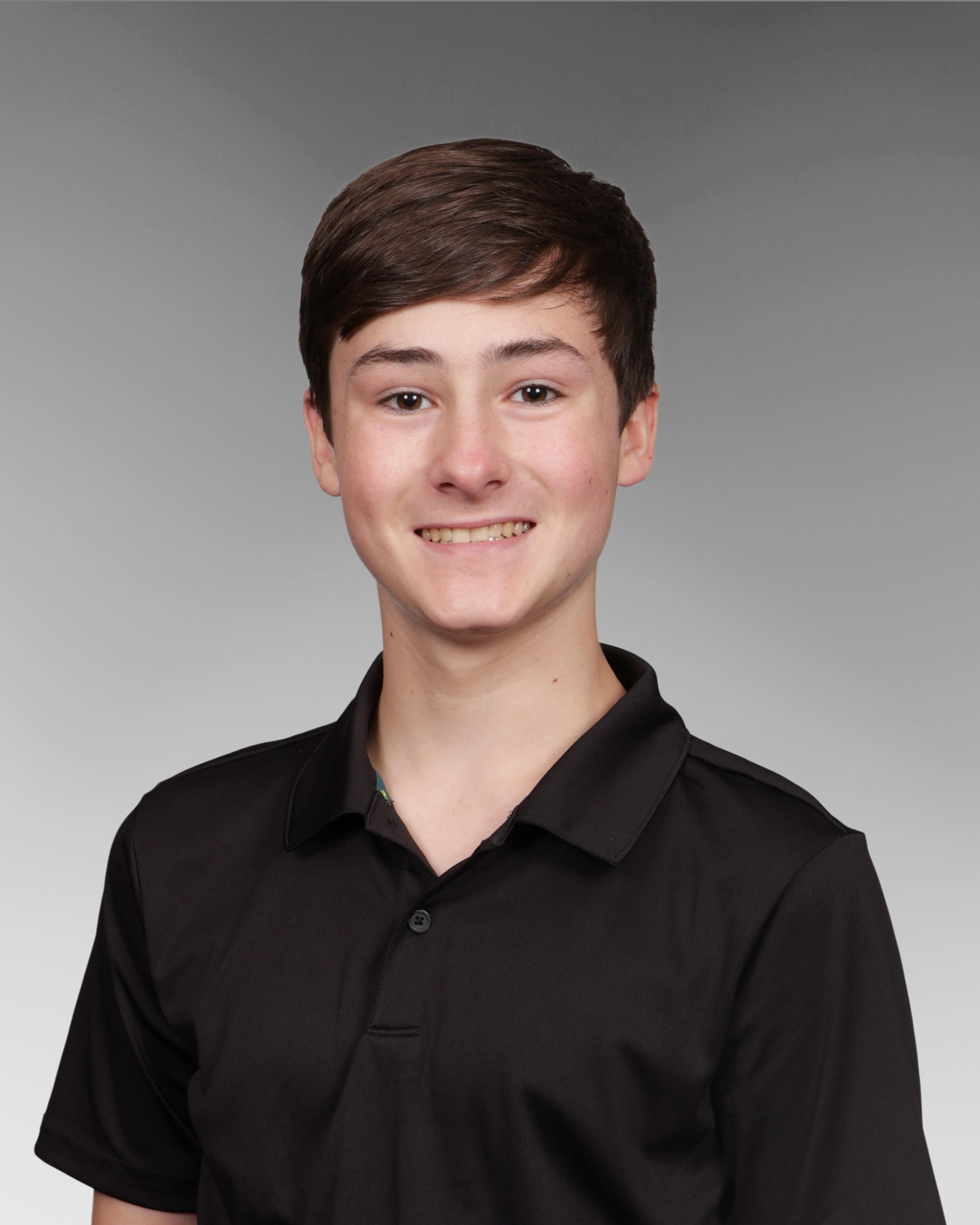
Nathaniel Gushurst

Nathaniel Gushurst

Nathaniel Gushurst

Nathaniel Gushurst

Pennsylvania, USA

Pennsylvania, USA

Pennsylvania, USA

From Community Service to Environmental Change

From Community Service to Environmental Change

From Community Service to Environmental Change

From Community Service to Environmental Change

October 8, 2025

October 8, 2025

October 8, 2025

“Summit programs are an incredible opportunity for any STEM student, not only for the valuable life lessons, but also the connections and possibilities it brings.

“Summit programs are an incredible opportunity for any STEM student, not only for the valuable life lessons, but also the connections and possibilities it brings.

“Summit programs are an incredible opportunity for any STEM student, not only for the valuable life lessons, but also the connections and possibilities it brings.

“Summit programs are an incredible opportunity for any STEM student, not only for the valuable life lessons, but also the connections and possibilities it brings.

By the end, I was left with a binder full of knowledge, a lifelong connection to some amazingly talented and kind people, and the skill set to go out and make a difference. For any student who wants to pursue a career in STEM or research, to connect with the future generation of scientists, or simply to get advice on any number of topics, I cannot recommend applying enough.”

By the end, I was left with a binder full of knowledge, a lifelong connection to some amazingly talented and kind people, and the skill set to go out and make a difference. For any student who wants to pursue a career in STEM or research, to connect with the future generation of scientists, or simply to get advice on any number of topics, I cannot recommend applying enough.”

By the end, I was left with a binder full of knowledge, a lifelong connection to some amazingly talented and kind people, and the skill set to go out and make a difference. For any student who wants to pursue a career in STEM or research, to connect with the future generation of scientists, or simply to get advice on any number of topics, I cannot recommend applying enough.”

By the end, I was left with a binder full of knowledge, a lifelong connection to some amazingly talented and kind people, and the skill set to go out and make a difference. For any student who wants to pursue a career in STEM or research, to connect with the future generation of scientists, or simply to get advice on any number of topics, I cannot recommend applying enough.”

Nathaniel Gushurst is a high school student from Pennsylvania dedicated to community service, especially related to environmental conservation, chemistry, and biology. He participated in both the Summit STEM Fellowship (SSF) and Summit Research Scholars (SRS) in 2025. After participating in the programs, Nathaniel was inspired to propose a new state law, aiming to make it easier for Pennsylvania residents to participate in conservation efforts in their own homes, while also banning the sale of invasive plant species.

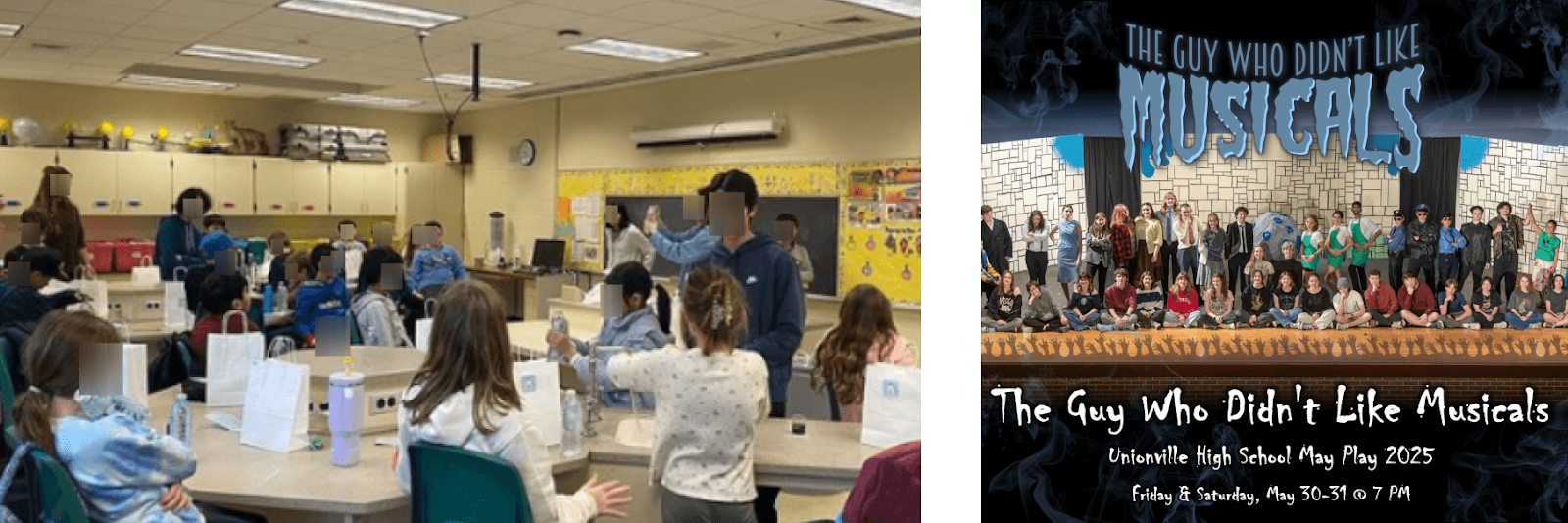
Nathaniel is an active member of the Interact Club, where he collaborates with his local Rotary group. He spends much of his time participating in roadside clean-ups, packaging meals for underserved communities, and working with Indigenous artists in South America to sell their art, with all proceeds going back to their community.  He is also working on a project called Science in a Bag, which aims to bring engaging science experiments to younger students. Read on to learn more about Nathaniel, his dedication to science and activism, and his aspirations for the future! 

Meet Nathaniel!

How did you initially become interested in STEM?

I've always been curious, and I was lucky to have parents who noticed that and provided me with opportunities to learn. I grew up reading books, visiting museums, and being taught that science is both fascinating and the future. My parents loved science themselves, so they always answered my questions and encouraged me to ask as many as I could. My dad does tech consulting, and my mother is in MedPeds.

What academic subjects or fields of STEM are you most interested in?

Overall, I’m definitely the most interested in biology and chemistry. While I'm not too keen on technology or pure mathematics, I enjoy implementing both into both of these fields. I'm also currently taking physics, and although I don’t have much experience in it yet, I’m enjoying it and appreciating the multiple sides of science. 

In my honors biology class, my teacher encouraged me to ask questions, which I did—probably to the point of annoying my classmates! My teacher suggested I take AP Biology and Chemistry simultaneously, so I took summer courses to fit that into my schedule. The same thing happened with chemistry; I kept asking questions and fell in love with the subject. 

What extracurricular activities are you involved in?

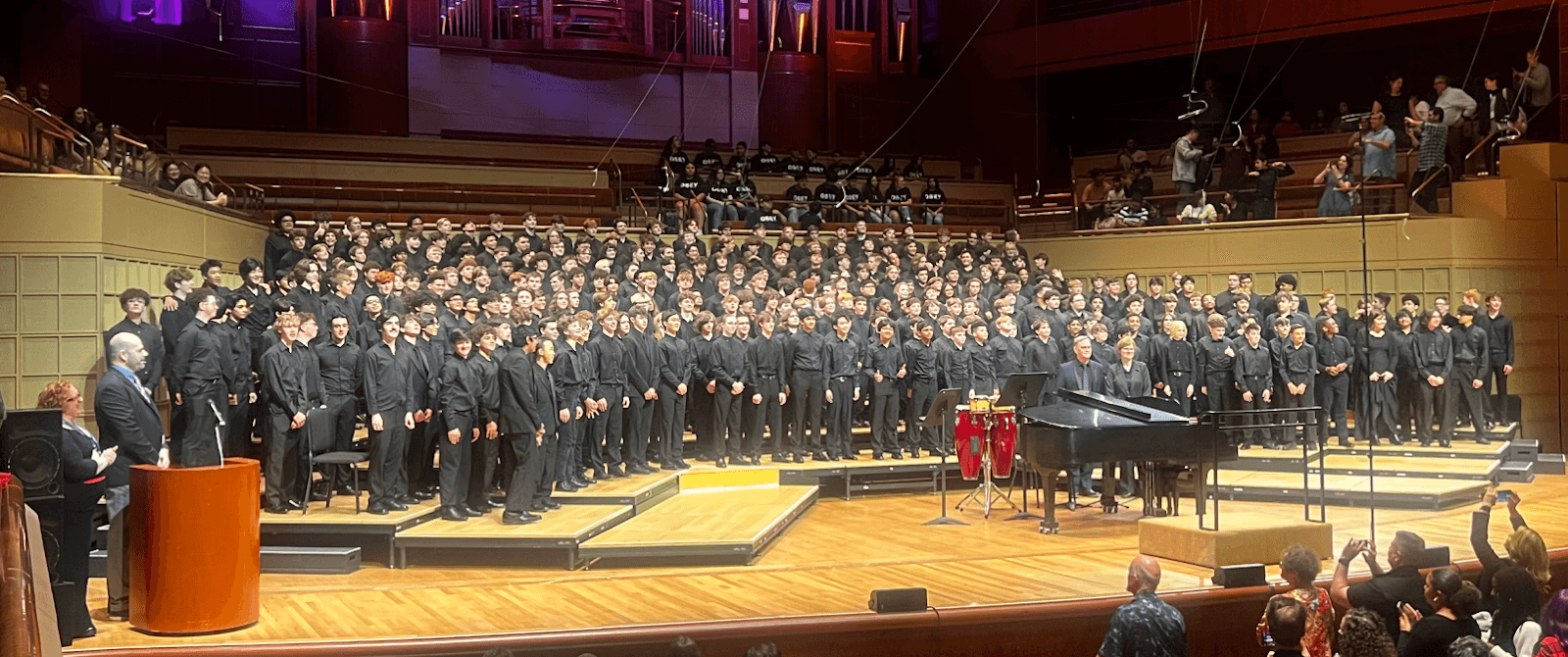
As the school year progresses, I plan to spend more time on science extracurriculars like Science Olympiad, Chemistry Olympiad, and hopefully research work with a local conservancy group. My time after school is mostly divided between two types of activities. First is service; I’m currently the vice president of the Interact Club at my school, where we coordinate with our local Rotary group to do roadside cleanups, work with indigenous artisans from South America to sell bracelets (with all funds going to them), and partner with a group called Project Cure. I’m also part of the NHS, Trium, and the Spanish Honor Society. I spend a lot of time volunteering in my community, which I find really enjoyable! The second group of activities I’m involved in is what I call “Voice,” which includes public speaking, debate, singing in the choir, and participating in school theater. 
Summit STEM Fellowship (SSF) Experience

What was your favorite part of the Summit STEM Fellowship?

The most common answer from fellows is probably the Fireside Chats, and I have to agree! They provided a great mix of STEM advice and genuine life experiences. The speakers showed their personalities, which made each session unique and engaging. I also loved the Office Hours and Ask-Me-Anything sessions because they felt personal and allowed everyone to get answers to shared questions.

Which specific event or speaker resonated with you the most during the fellowship?

I really enjoyed Anne Lee and Michael Chen’s Fireside Chats. Their insights and experiences were incredibly relatable and inspiring, and they created a welcoming atmosphere that encouraged open discussion. Anne's Fireside Chat on scholarships and planning was incredibly in-depth and helpful, providing all the details I could want about scholarships and applications, along with advice on storytelling, project initiation, and time management. I also appreciated Michael's Fireside Chat for its clarity and effectiveness, as he laid out a clear, in-depth checklist for fundraising and finding a passion. What he said really stood out to me: You can do things if you care enough about them. I've been trying to live by that quote because it encapsulates the potential anyone can have if they're motivated.

What are some of the specific skills or takeaways you learned from the fellowship?

The biggest skill I've taken away is time management, especially from Alexa Fein’s lecture. These time management skills have really saved me, especially since I often get home late and have five AP classes' worth of homework. Following her advice, I set up a Google Calendar and now put everything in my life on it. The three-minute rule is one technique that has stuck with me, and I use it quite often to motivate myself. 

Also, the lesson that you can really do anything with determination is incredibly valuable. It's not always easy, and many people will say no to you, but if you truly care about something, you can almost always achieve your goals. That's a lesson that will serve me for the rest of my life!
Summit Research Scholars (SRS) Experience

What was your favorite part about the Summit Research Scholars (SRS)?

The research lessons were really valuable for me, because not only did they help me come up with an actual idea, but also a blueprint for future research. I’d also say the technical lessons were a highlight. Learning LaTeX and Beamer was especially cool because it gave us a sneak peek into what the industry actually uses, and it gave me some foresight into my future. I was surprised by how much I enjoyed the technical workshops, and that experience is part of why I’m considering taking a computer science class next year!

Can you describe your research topic and why you chose to explore it?

My research question was about exploring the impacts of climate change on our health. I’m very interested in the environment, and I’m also interested in chemistry, so from the beginning of the program, I was looking for a way to combine those two interests. This pathway felt like something I could explore further, and it ended up shaping my final topic, which focused on how climate-based nutrient loss might affect the health of cells.

Looking back, what was the most valuable skill or lesson you learned through SRS?

One of the most valuable lessons for me was learning that I can actually start a research project and make progress, even in a short amount of time. Before SRS, research felt like something that would take an extremely long time just to get started. Going through the proposal structure showed me that you can build a strong foundation fairly quickly, which made the whole idea of research feel much more manageable!

SRS also showed me that I don’t need to wait for external opportunities to start working on research. Even though it can still be difficult to get connections or work in a lab, I don’t need to wait for a response to a cold email to begin researching topics I’m interested in. I can start reading papers and developing ideas on my own, and SRS really helped me realize that! 

Future Aspirations

What are your goals over the next few years, and what type of career are you hoping to pursue?

In the next five years, I plan to graduate from high school and then attend college for about four years. While I'm not set on a specific career yet, I'm enjoying chemistry the most, so I might pursue chemical engineering or work in a lab. Because I spent so much time researching during SRS, I feel like I’ve honed down what I really like in terms of future careers.

My main priority is to maintain a connection with the people my work helps. I want to know that my efforts are improving someone’s life, rather than focusing solely on the career itself. My best idea so far is to focus on climate change. There are researchers in the fields of science, chemistry, and biochemistry working towards climate change goals, which can have a tangible impact on people's lives. It’s definitely the problem of our generation. 

Are there any projects you’re currently working on since the programs ended?

Yes! I’m working on getting a new environmental conservation law passed in Pennsylvania and, hopefully, collaborating with a local conservancy group. I went through my notes, re-read Michael's advice, and decided it would be beneficial for the state to have this new law. Organizing it wasn't difficult at all. I wrote up a two-page document outlining the benefits, emailed my representative, and scheduled the meeting. It was that simple! I met with the PA state representative, and she’s now working to get bipartisan support for the proposal, which was very exciting for me!

At my school, I’m trying to establish a branch of the Science National Honor Society. I’m also the treasurer of a club, Science in a Bag, which brings science experiments to middle and elementary school students. We design experiments that are safe for elementary and middle schoolers, putting all the supplies in a bag. We either host events where we guide the students through the experiments, teaching them about the underlying scientific principles, or we send the bags with instruction pamphlets to other schools that are further away!
Nathaniel Gushurst is a high school student from Pennsylvania dedicated to community service, especially related to environmental conservation, chemistry, and biology. He participated in both the Summit STEM Fellowship (SSF) and Summit Research Scholars (SRS) in 2025. After participating in the programs, Nathaniel was inspired to propose a new state law, aiming to make it easier for Pennsylvania residents to participate in conservation efforts in their own homes, while also banning the sale of invasive plant species.

Nathaniel is an active member of the Interact Club, where he collaborates with his local Rotary group. He spends much of his time participating in roadside clean-ups, packaging meals for underserved communities, and working with Indigenous artists in South America to sell their art, with all proceeds going back to their community.  He is also working on a project called Science in a Bag, which aims to bring engaging science experiments to younger students. Read on to learn more about Nathaniel, his dedication to science and activism, and his aspirations for the future! 

Meet Nathaniel!

How did you initially become interested in STEM?

I've always been curious, and I was lucky to have parents who noticed that and provided me with opportunities to learn. I grew up reading books, visiting museums, and being taught that science is both fascinating and the future. My parents loved science themselves, so they always answered my questions and encouraged me to ask as many as I could. My dad does tech consulting, and my mother is in MedPeds.

What academic subjects or fields of STEM are you most interested in?

Overall, I’m definitely the most interested in biology and chemistry. While I'm not too keen on technology or pure mathematics, I enjoy implementing both into both of these fields. I'm also currently taking physics, and although I don’t have much experience in it yet, I’m enjoying it and appreciating the multiple sides of science. 

In my honors biology class, my teacher encouraged me to ask questions, which I did—probably to the point of annoying my classmates! My teacher suggested I take AP Biology and Chemistry simultaneously, so I took summer courses to fit that into my schedule. The same thing happened with chemistry; I kept asking questions and fell in love with the subject. 

What extracurricular activities are you involved in?

As the school year progresses, I plan to spend more time on science extracurriculars like Science Olympiad, Chemistry Olympiad, and hopefully research work with a local conservancy group. My time after school is mostly divided between two types of activities. First is service; I’m currently the vice president of the Interact Club at my school, where we coordinate with our local Rotary group to do roadside cleanups, work with indigenous artisans from South America to sell bracelets (with all funds going to them), and partner with a group called Project Cure. I’m also part of the NHS, Trium, and the Spanish Honor Society. I spend a lot of time volunteering in my community, which I find really enjoyable! The second group of activities I’m involved in is what I call “Voice,” which includes public speaking, debate, singing in the choir, and participating in school theater. 

Summit STEM Fellowship (SSF) Experience

What was your favorite part of the Summit STEM Fellowship?

The most common answer from fellows is probably the Fireside Chats, and I have to agree! They provided a great mix of STEM advice and genuine life experiences. The speakers showed their personalities, which made each session unique and engaging. I also loved the Office Hours and Ask-Me-Anything sessions because they felt personal and allowed everyone to get answers to shared questions.

Which specific event or speaker resonated with you the most during the fellowship?

I really enjoyed Anne Lee and Michael Chen’s Fireside Chats. Their insights and experiences were incredibly relatable and inspiring, and they created a welcoming atmosphere that encouraged open discussion. Anne's Fireside Chat on scholarships and planning was incredibly in-depth and helpful, providing all the details I could want about scholarships and applications, along with advice on storytelling, project initiation, and time management. I also appreciated Michael's Fireside Chat for its clarity and effectiveness, as he laid out a clear, in-depth checklist for fundraising and finding a passion. What he said really stood out to me: You can do things if you care enough about them. I've been trying to live by that quote because it encapsulates the potential anyone can have if they're motivated.

What are some of the specific skills or takeaways you learned from the fellowship?

The biggest skill I've taken away is time management, especially from Alexa Fein’s lecture. These time management skills have really saved me, especially since I often get home late and have five AP classes' worth of homework. Following her advice, I set up a Google Calendar and now put everything in my life on it. The three-minute rule is one technique that has stuck with me, and I use it quite often to motivate myself. 

Also, the lesson that you can really do anything with determination is incredibly valuable. It's not always easy, and many people will say no to you, but if you truly care about something, you can almost always achieve your goals. That's a lesson that will serve me for the rest of my life!

Summit Research Scholars (SRS) Experience

What was your favorite part about the Summit Research Scholars (SRS)?

The research lessons were really valuable for me, because not only did they help me come up with an actual idea, but also a blueprint for future research. I’d also say the technical lessons were a highlight. Learning LaTeX and Beamer was especially cool because it gave us a sneak peek into what the industry actually uses, and it gave me some foresight into my future. I was surprised by how much I enjoyed the technical workshops, and that experience is part of why I’m considering taking a computer science class next year!

Can you describe your research topic and why you chose to explore it?

My research question was about exploring the impacts of climate change on our health. I’m very interested in the environment, and I’m also interested in chemistry, so from the beginning of the program, I was looking for a way to combine those two interests. This pathway felt like something I could explore further, and it ended up shaping my final topic, which focused on how climate-based nutrient loss might affect the health of cells.

Looking back, what was the most valuable skill or lesson you learned through SRS?

One of the most valuable lessons for me was learning that I can actually start a research project and make progress, even in a short amount of time. Before SRS, research felt like something that would take an extremely long time just to get started. Going through the proposal structure showed me that you can build a strong foundation fairly quickly, which made the whole idea of research feel much more manageable!

SRS also showed me that I don’t need to wait for external opportunities to start working on research. Even though it can still be difficult to get connections or work in a lab, I don’t need to wait for a response to a cold email to begin researching topics I’m interested in. I can start reading papers and developing ideas on my own, and SRS really helped me realize that! 

Future Aspirations

What are your goals over the next few years, and what type of career are you hoping to pursue?

In the next five years, I plan to graduate from high school and then attend college for about four years. While I'm not set on a specific career yet, I'm enjoying chemistry the most, so I might pursue chemical engineering or work in a lab. Because I spent so much time researching during SRS, I feel like I’ve honed down what I really like in terms of future careers.

My main priority is to maintain a connection with the people my work helps. I want to know that my efforts are improving someone’s life, rather than focusing solely on the career itself. My best idea so far is to focus on climate change. There are researchers in the fields of science, chemistry, and biochemistry working towards climate change goals, which can have a tangible impact on people's lives. It’s definitely the problem of our generation. 

Are there any projects you’re currently working on since the programs ended?

Yes! I’m working on getting a new environmental conservation law passed in Pennsylvania and, hopefully, collaborating with a local conservancy group. I went through my notes, re-read Michael's advice, and decided it would be beneficial for the state to have this new law. Organizing it wasn't difficult at all. I wrote up a two-page document outlining the benefits, emailed my representative, and scheduled the meeting. It was that simple! I met with the PA state representative, and she’s now working to get bipartisan support for the proposal, which was very exciting for me!

At my school, I’m trying to establish a branch of the Science National Honor Society. I’m also the treasurer of a club, Science in a Bag, which brings science experiments to middle and elementary school students. We design experiments that are safe for elementary and middle schoolers, putting all the supplies in a bag. We either host events where we guide the students through the experiments, teaching them about the underlying scientific principles, or we send the bags with instruction pamphlets to other schools that are further away!

Nathaniel Gushurst is a high school student from Pennsylvania dedicated to community service, especially related to environmental conservation, chemistry, and biology. He participated in both the Summit STEM Fellowship (SSF) and Summit Research Scholars (SRS) in 2025. After participating in the programs, Nathaniel was inspired to propose a new state law, aiming to make it easier for Pennsylvania residents to participate in conservation efforts in their own homes, while also banning the sale of invasive plant species.

Nathaniel is an active member of the Interact Club, where he collaborates with his local Rotary group. He spends much of his time participating in roadside clean-ups, packaging meals for underserved communities, and working with Indigenous artists in South America to sell their art, with all proceeds going back to their community.  He is also working on a project called Science in a Bag, which aims to bring engaging science experiments to younger students. Read on to learn more about Nathaniel, his dedication to science and activism, and his aspirations for the future! 

Meet Nathaniel!

How did you initially become interested in STEM?

I've always been curious, and I was lucky to have parents who noticed that and provided me with opportunities to learn. I grew up reading books, visiting museums, and being taught that science is both fascinating and the future. My parents loved science themselves, so they always answered my questions and encouraged me to ask as many as I could. My dad does tech consulting, and my mother is in MedPeds.

What academic subjects or fields of STEM are you most interested in?

Overall, I’m definitely the most interested in biology and chemistry. While I'm not too keen on technology or pure mathematics, I enjoy implementing both into both of these fields. I'm also currently taking physics, and although I don’t have much experience in it yet, I’m enjoying it and appreciating the multiple sides of science. 

In my honors biology class, my teacher encouraged me to ask questions, which I did—probably to the point of annoying my classmates! My teacher suggested I take AP Biology and Chemistry simultaneously, so I took summer courses to fit that into my schedule. The same thing happened with chemistry; I kept asking questions and fell in love with the subject. 

What extracurricular activities are you involved in?

As the school year progresses, I plan to spend more time on science extracurriculars like Science Olympiad, Chemistry Olympiad, and hopefully research work with a local conservancy group. My time after school is mostly divided between two types of activities. First is service; I’m currently the vice president of the Interact Club at my school, where we coordinate with our local Rotary group to do roadside cleanups, work with indigenous artisans from South America to sell bracelets (with all funds going to them), and partner with a group called Project Cure. I’m also part of the NHS, Trium, and the Spanish Honor Society. I spend a lot of time volunteering in my community, which I find really enjoyable! The second group of activities I’m involved in is what I call “Voice,” which includes public speaking, debate, singing in the choir, and participating in school theater. 

Summit STEM Fellowship (SSF) Experience

What was your favorite part of the Summit STEM Fellowship?

The most common answer from fellows is probably the Fireside Chats, and I have to agree! They provided a great mix of STEM advice and genuine life experiences. The speakers showed their personalities, which made each session unique and engaging. I also loved the Office Hours and Ask-Me-Anything sessions because they felt personal and allowed everyone to get answers to shared questions.

Which specific event or speaker resonated with you the most during the fellowship?

I really enjoyed Anne Lee and Michael Chen’s Fireside Chats. Their insights and experiences were incredibly relatable and inspiring, and they created a welcoming atmosphere that encouraged open discussion. Anne's Fireside Chat on scholarships and planning was incredibly in-depth and helpful, providing all the details I could want about scholarships and applications, along with advice on storytelling, project initiation, and time management. I also appreciated Michael's Fireside Chat for its clarity and effectiveness, as he laid out a clear, in-depth checklist for fundraising and finding a passion. What he said really stood out to me: You can do things if you care enough about them. I've been trying to live by that quote because it encapsulates the potential anyone can have if they're motivated.

What are some of the specific skills or takeaways you learned from the fellowship?

The biggest skill I've taken away is time management, especially from Alexa Fein’s lecture. These time management skills have really saved me, especially since I often get home late and have five AP classes' worth of homework. Following her advice, I set up a Google Calendar and now put everything in my life on it. The three-minute rule is one technique that has stuck with me, and I use it quite often to motivate myself. 

Also, the lesson that you can really do anything with determination is incredibly valuable. It's not always easy, and many people will say no to you, but if you truly care about something, you can almost always achieve your goals. That's a lesson that will serve me for the rest of my life!

Summit Research Scholars (SRS) Experience

What was your favorite part about the Summit Research Scholars (SRS)?

The research lessons were really valuable for me, because not only did they help me come up with an actual idea, but also a blueprint for future research. I’d also say the technical lessons were a highlight. Learning LaTeX and Beamer was especially cool because it gave us a sneak peek into what the industry actually uses, and it gave me some foresight into my future. I was surprised by how much I enjoyed the technical workshops, and that experience is part of why I’m considering taking a computer science class next year!

Can you describe your research topic and why you chose to explore it?

My research question was about exploring the impacts of climate change on our health. I’m very interested in the environment, and I’m also interested in chemistry, so from the beginning of the program, I was looking for a way to combine those two interests. This pathway felt like something I could explore further, and it ended up shaping my final topic, which focused on how climate-based nutrient loss might affect the health of cells.

Looking back, what was the most valuable skill or lesson you learned through SRS?

One of the most valuable lessons for me was learning that I can actually start a research project and make progress, even in a short amount of time. Before SRS, research felt like something that would take an extremely long time just to get started. Going through the proposal structure showed me that you can build a strong foundation fairly quickly, which made the whole idea of research feel much more manageable!

SRS also showed me that I don’t need to wait for external opportunities to start working on research. Even though it can still be difficult to get connections or work in a lab, I don’t need to wait for a response to a cold email to begin researching topics I’m interested in. I can start reading papers and developing ideas on my own, and SRS really helped me realize that! 

Future Aspirations

What are your goals over the next few years, and what type of career are you hoping to pursue?

In the next five years, I plan to graduate from high school and then attend college for about four years. While I'm not set on a specific career yet, I'm enjoying chemistry the most, so I might pursue chemical engineering or work in a lab. Because I spent so much time researching during SRS, I feel like I’ve honed down what I really like in terms of future careers.

My main priority is to maintain a connection with the people my work helps. I want to know that my efforts are improving someone’s life, rather than focusing solely on the career itself. My best idea so far is to focus on climate change. There are researchers in the fields of science, chemistry, and biochemistry working towards climate change goals, which can have a tangible impact on people's lives. It’s definitely the problem of our generation. 

Are there any projects you’re currently working on since the programs ended?

Yes! I’m working on getting a new environmental conservation law passed in Pennsylvania and, hopefully, collaborating with a local conservancy group. I went through my notes, re-read Michael's advice, and decided it would be beneficial for the state to have this new law. Organizing it wasn't difficult at all. I wrote up a two-page document outlining the benefits, emailed my representative, and scheduled the meeting. It was that simple! I met with the PA state representative, and she’s now working to get bipartisan support for the proposal, which was very exciting for me!

At my school, I’m trying to establish a branch of the Science National Honor Society. I’m also the treasurer of a club, Science in a Bag, which brings science experiments to middle and elementary school students. We design experiments that are safe for elementary and middle schoolers, putting all the supplies in a bag. We either host events where we guide the students through the experiments, teaching them about the underlying scientific principles, or we send the bags with instruction pamphlets to other schools that are further away!

Summit Education hosts virtual summer programs for high-achieving students in grades 8–12 from around the world. We are proud to have supported over 1,000 alumni across 60+ countries. Learn more about our alumni through the Student Spotlights series, and stay up to date by subscribing to the Summit Education Newsletter. To learn more about our programs, including the Summit STEM Fellowship (SSF) and Summit Research Scholars (SRS), please visit summiteducation.org.