Yoon Nadi is a high school student from Myanmar with a deep passion for psychology, neuroscience, and medicine. She is particularly interested in exploring the connections between mental well-being and physical health, and has volunteered her time promoting mental health care at orphanages through CS Child. Yoon has since been inspired by her time at the Summit Education to launch Tomorrow’s Mind, a global mental health initiative aimed at fostering open conversations about mental health among youth.
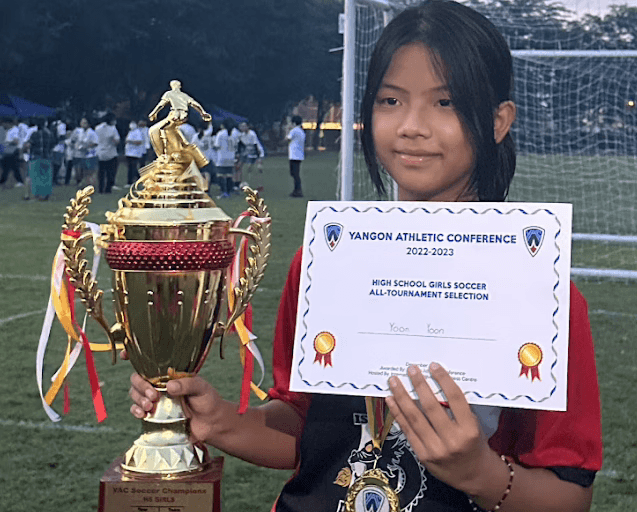
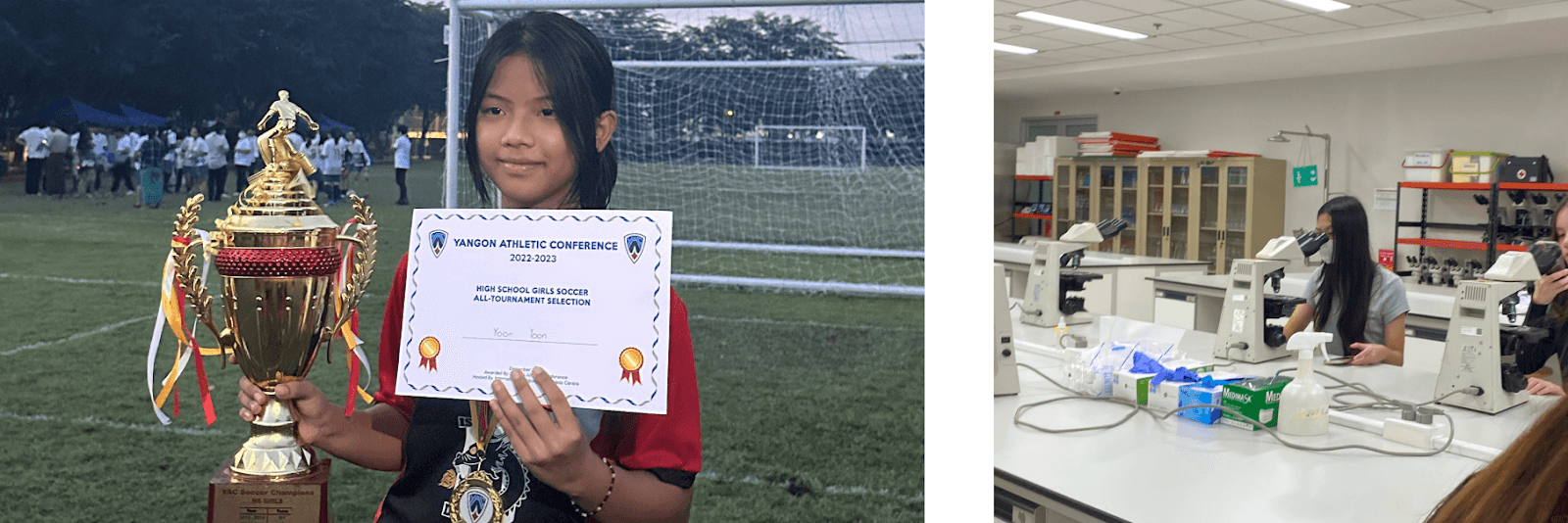
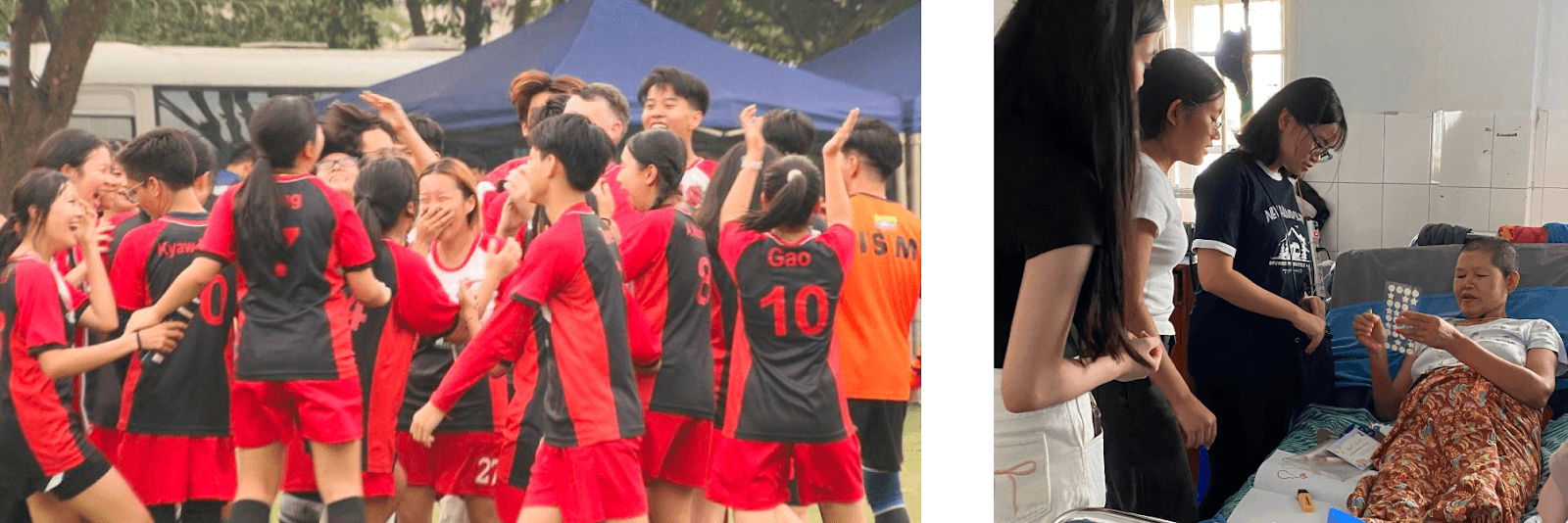
Yoon is an active member in her school’s community, participating in her school’s UNICEF Chapter, the National Honor Society, and the Student Council. She is also a passionate member of her school’s varsity football team, where she enjoys participating in championships with her friends. Read on to learn more about Yoon, her journey in STEM, and her aspirations for the future!
Meet Yoon!
How did you initially become interested in STEM?
I was always a science and math kid in general, but I became particularly interested in STEM through my curiosity about the human mind and body. Since I was little, I've always wondered why people think, feel, or act the way they do. During COVID-19, I noticed how the mental health of my peers and everyone around me was affected, which deepened my interest in psychology. I realized that psychology is connected to medicine and neuroscience, motivating me to pursue a path through STEM that focuses on both physical and mental well-being. For me, STEM is about using science to prove and improve human well-being.
What academic subjects or fields of STEM are you most interested in?
I'm most interested in math and science. I've taken a lot of math courses, and I'm passionate about psychology, neuroscience, and medicine because they focus on people and the human mind. I enjoy biology and chemistry as they provide a foundation for going into medicine. I've also read about public health from college courses, which I think is important because it connects individual care to larger systems. When we talk about mental health, accessibility is crucial. Together, these courses and fields of STEM give a better picture of both the science and social science of healthcare.
What extracurricular activities are you involved in?
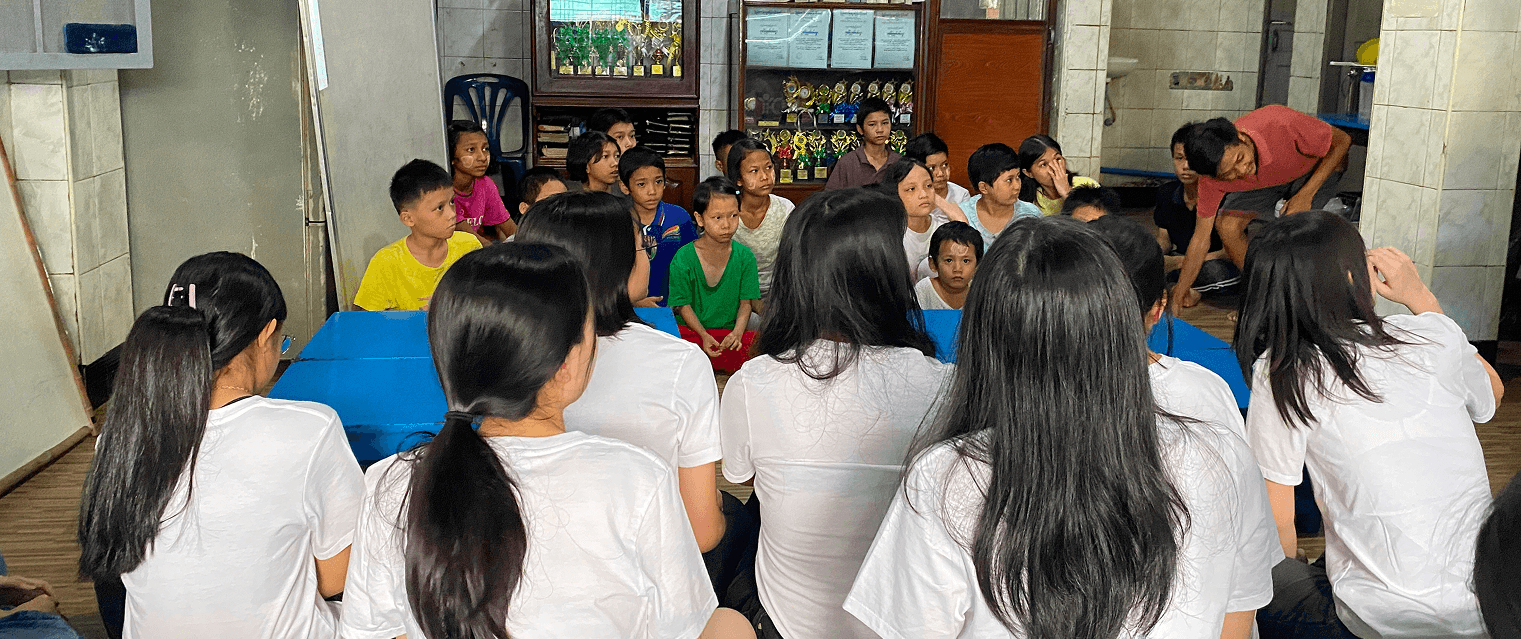
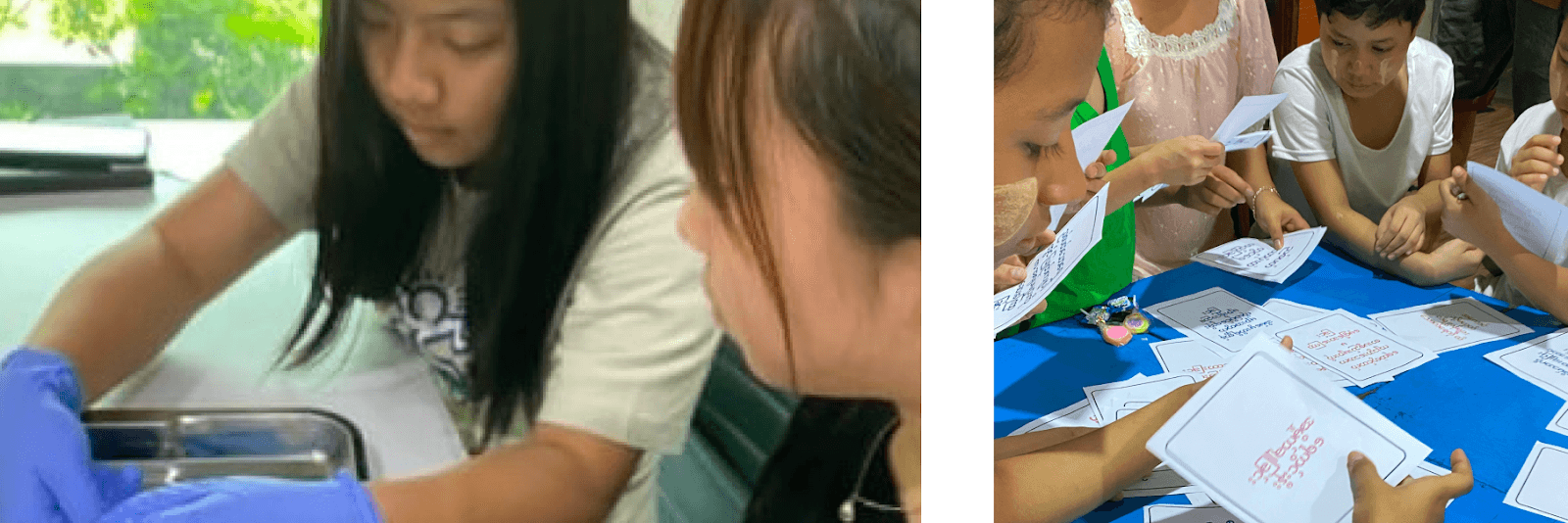
At school, I’ve been involved in the National Honor Society, Student Council, and our school UNICEF chapter. Last year, I was part of CS Child, a community service organization focused on children's well-being. We went to workshops at orphanages to help and have fun with the kids. Outside of school, one of my main projects right now is Tomorrow's Mind, a global mental health initiative I started after the fellowship. I also play on my school’s varsity football team.
Summit STEM Fellowship (SSF) Experience
What was your favorite part of the Summit STEM Fellowship?
There were so many things I loved, but the sense of community really stood out to me. Coming in as an international student from a very different time zone, I was worried about being included or making it to meetings. However, everyone was so welcoming - from the staff to the mentors and the other fellows. It felt like a space where everyone could learn from each other, no matter where we were. That sense of community gave me the confidence to share my own voice.
Which event or speaker resonated with you the most during the fellowship?
Isabella Delbakhsh’s Fireside Chat, where she talked about turning ideas into reality, really stood out to me. It showed me how to take an idea for a project and turn it into something real. "Tomorrow's Mind" has been an idea I’ve had since the start of this year, and Isabella's Fireside Chat inspired me to take it more seriously and actually launch it. Amanda Kossoff's Skill Builder on social entrepreneurship also made me think about how to grow Tomorrow's Mind. Additionally, Trisha Kulkarni's Fireside Chat on stress management and burnout was impactful for me, especially as I prepare for harder classes this year.
What specific skills or takeaways did you learn from the fellowship?
I learned three main skills: how to network better, how to email mentors to gain more experience, and how to manage my time effectively. Alexa Fein’s Fireside Chat in particular provided me with tools that I still use today to balance school, SAT prep, and my projects. Beyond the practical side, I also learned personal lessons about self-resilience and self-belief. All of these helped me realize that even if I face setbacks or obstacles, I can keep pushing forward.
What advice would you give to future Summit STEM fellows?
A really important piece of advice is not to be afraid to connect with mentors, ask questions, and talk to other fellows. The STEM community is really welcoming and nice. Even small conversations can provide you with ideas or encouragement that you wouldn't have expected.
Another thing is not to feel like you need to figure it all out right then and there. A big part of the program is about exploring and discovering what you want and what others are doing. If you stay open, you'll walk away from the Summit STEM Fellowship with lessons that can shape both your future in life and your planned projects.
Summit Research Scholars (SRS) Experience
What was your favorite part about the Summit Research Scholars (SRS)?
The curriculum was rigorous and empowering. My favorite part was the balance between independent research and mentorship. I had the freedom to explore a topic I genuinely cared about, while also receiving structured guidance that pushed me to think and grow. I also really enjoyed the community aspect of the program, especially being able to post on EdSTEM to get feedback from mentors and peers. Seeing how engaged and motivated everyone else was made the experience feel much more meaningful!
Can you describe your research topic or question, and why you chose to explore it?
My research was focused on examining how psychological and social factors influence youth mental health and learning. I chose this topic in particular because it sits at the intersection of psychology, education, and public health. It reflects issues that I see around me every day, especially after catastrophic events like the pandemic and our political situation in Myanmar. Youth mental health is often overlooked, and I wanted my research to feel relevant and not just theoretical. SRS allowed me to take something I already cared about and explore it more deeply and academically.
Looking back, what was the most valuable skill or lesson you learned through SRS?
I learned that strong research is not about finding quick answers, but about refining questions, evaluating the evidence, and thinking critically. I learned how to engage with research more deeply and how to be comfortable sitting with uncertainty while figuring things out. I used to think research was more linear — you come up with a question, find evidence, and then you’re done. But through SRS, I learned that there’s constant refining, re-evaluating, and rethinking the assumptions we first had.
Also, SRS helped me see research as a tool for impact and not just academic output. It showed me how research can be used to address real-world issues and inform change.
Future Aspirations
What are your goals over the next five to ten years?
I graduate next year, so I plan to finish graduating, but over the next decade, I hope to pursue medicine and psychology, and maybe even minor in business to help my parents. Eventually, I want to make mental health more accessible, especially in Myanmar, where it is often stigmatized. I want to work at the intersection of clinical care and mental health to provide support medically and physically, while also supporting mental well-being.
While participating in Summit programs, I founded Tomorrow’s Mind, which I hope to continue expanding. It focuses on education, advocacy, and peer support, aiming to make conversations about mental health among youth more open and accessible. I hope to make a real impact!
How have the programs influenced your career aspirations?
I plan to continue developing my leadership and entrepreneurship skills to bring more ideas and expand Tomorrow's Mind. I hope to be working on it for the next ten years because I believe it's crucial for youth to have access to and be aware of the importance of their mental health. In the long term, I want to build a career that combines my interests in science and psychology, integrating empathy and impact into my work.
Before SSF, I was already interested in psychology and medicine, but it inspired me to explore business as well. My parents encouraged me to pursue business, and through the fellowship, I learned that it can be a creative endeavor, not just about selling or trading. I want to blend my creativity and entrepreneurship with my interests in medicine and psychology, rather than focusing solely on one path!
On the other hand, SRS helped clarify my long-term goal, which is to combine psychology, education, and research in a way that creates impact. It reinforced my interest in working in spaces where mental health support and educational resources are still lacking, particularly in my community. Seeing how research can contribute to that work made it feel like an essential part of my future path!